✨ New Arrivals Just Dropped!Explore

$13.08
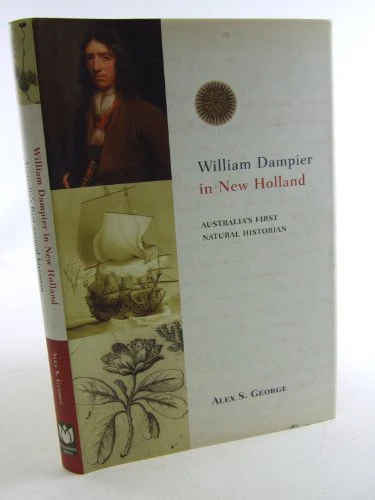
William Dampier in New Holland: Australia's First Natural Historian—
$13.08
The Story
NB: This is a secondhand book in very good condition. See our FAQs for more information. Please note that the jacket image is indicative only. A description of our secondhand books is not always available. Please contact us if you have a question about this title.
Author: A. S. George
Format: Hardback
Number of Pages: 192
Over eighty years before James Cook arrived on the east coast of Australia, Dampier had landed on Western Australian shores -- the first English explorer to set foot on Australia. A pirate who collected plant specimens as his booty? The enigma that was William Dampier, has puzzled historians for centuries. Adventurer, explorer, travel writer, botanist, hydrographer, natural historian -- Dampier was all of these. His voyages of 1688 and 1699 resulted in an extraordinary collection of specimens, drawings and journal accounts of plants, marine and land animals, shells and insects. These were the first specimens to be taken back to England for extensive scientific scrutiny. Many of these specimens have survived to this day and are here reproduced and matched with modern photographs taken near the sites where he saw them.
Author: A. S. George
Format: Hardback
Number of Pages: 192
Over eighty years before James Cook arrived on the east coast of Australia, Dampier had landed on Western Australian shores -- the first English explorer to set foot on Australia. A pirate who collected plant specimens as his booty? The enigma that was William Dampier, has puzzled historians for centuries. Adventurer, explorer, travel writer, botanist, hydrographer, natural historian -- Dampier was all of these. His voyages of 1688 and 1699 resulted in an extraordinary collection of specimens, drawings and journal accounts of plants, marine and land animals, shells and insects. These were the first specimens to be taken back to England for extensive scientific scrutiny. Many of these specimens have survived to this day and are here reproduced and matched with modern photographs taken near the sites where he saw them.
Description
NB: This is a secondhand book in very good condition. See our FAQs for more information. Please note that the jacket image is indicative only. A description of our secondhand books is not always available. Please contact us if you have a question about this title.
Author: A. S. George
Format: Hardback
Number of Pages: 192
Over eighty years before James Cook arrived on the east coast of Australia, Dampier had landed on Western Australian shores -- the first English explorer to set foot on Australia. A pirate who collected plant specimens as his booty? The enigma that was William Dampier, has puzzled historians for centuries. Adventurer, explorer, travel writer, botanist, hydrographer, natural historian -- Dampier was all of these. His voyages of 1688 and 1699 resulted in an extraordinary collection of specimens, drawings and journal accounts of plants, marine and land animals, shells and insects. These were the first specimens to be taken back to England for extensive scientific scrutiny. Many of these specimens have survived to this day and are here reproduced and matched with modern photographs taken near the sites where he saw them.
Author: A. S. George
Format: Hardback
Number of Pages: 192
Over eighty years before James Cook arrived on the east coast of Australia, Dampier had landed on Western Australian shores -- the first English explorer to set foot on Australia. A pirate who collected plant specimens as his booty? The enigma that was William Dampier, has puzzled historians for centuries. Adventurer, explorer, travel writer, botanist, hydrographer, natural historian -- Dampier was all of these. His voyages of 1688 and 1699 resulted in an extraordinary collection of specimens, drawings and journal accounts of plants, marine and land animals, shells and insects. These were the first specimens to be taken back to England for extensive scientific scrutiny. Many of these specimens have survived to this day and are here reproduced and matched with modern photographs taken near the sites where he saw them.